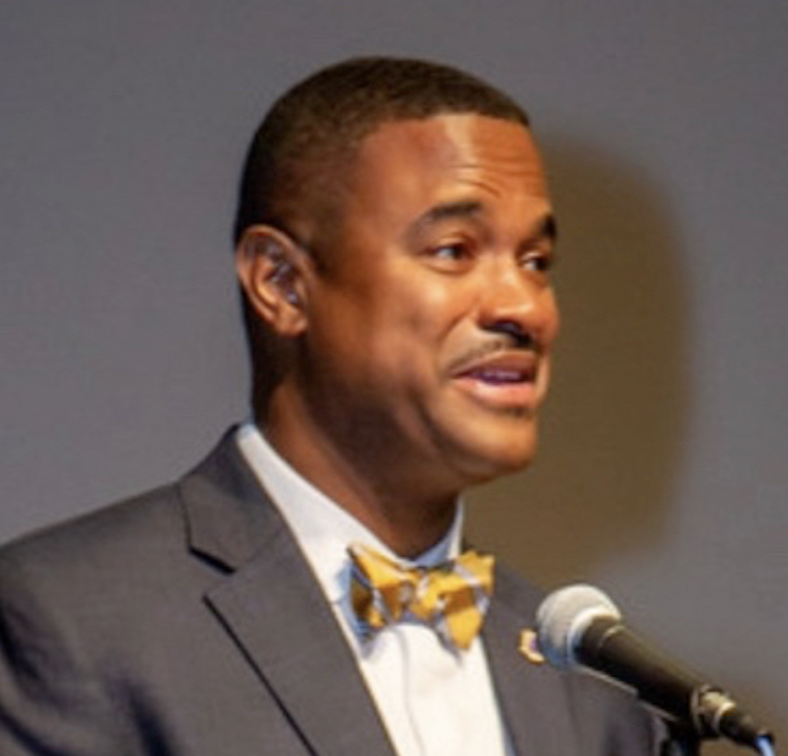
Last week I wrote that college athletes deserve a fair share of the money they generate. The pushback essentially came down to the same thing.
They’re already paid.
So let me answer that, as someone who lived the deal. I earned my education in the classroom. My scholarship was paid for with blood, sweat and tears; plus four years as a standout starter. A scholarship is real, and I am grateful for mine. But it is not a gift. It is a trade. And not even a fair one, when you think about it. For the two sports that fund everything, it is a trade where one side sets the price and the other is told to be thankful. The riches people picture, the headline NIL deals, go to a handful at the top. Most players never see anything close.
And spare me the lecture about focusing on education and a career after ball. Everyone goes to college to build a future and earn a living. That is the point of going. Mark Zuckerberg left Harvard to do exactly that, and we called him a visionary. Only the revenue athlete is told the money should embarrass him. Told that whatever his market value, and whatever the Supreme Court has already ruled, he should keep waiting to be paid what he has earned. Never mind the career development he sacrifices by being a Division I football or men’s basketball player. People love pretending that athletes have the same academic access and experience as everyone else. They don’t. Yet, they want them to pass up what can possibly equate to generational wealth for the sake of appearances. That they should be “loyal” to the same institutions that discard them once they’ve exhausted their eligibility, while coaches are allowed to pursue greener pastures without criticism or judgment for doing so.
I am not saying hand teenagers blank checks. I am saying, pay them their fair share. The people with concerns about pro-style money flooding the college game are not wrong to worry. Limits can work. So can guardrails, and a real revenue share. Too much of anything is a problem. But refusing to pay players anything near their fair share points to a different and uglier one, rooted in something older than America itself.
The whole argument comes down to one word. Who. Who sets the limits. Right now the schools, the conferences, and the NCAA set them alone, and the athletes who generate the money get no seat at the table. The bill the Senate just passed, 77 to 22, keeps it that way. It caps what players can earn, and in the same stretch the Senate voted down a cap on what coaches can earn. The money is there. It always was. They spent more than a century fighting not to pay us at all. They lost that fight. So they are fighting a new one now, over how much we can earn and who gets to decide.
The worry I heard most was about the other sports. If players get paid, who funds the teams that do not sell tickets? It is a fair question. But hand us a real share and a real voice, and watch where a lot of us would put it, straight back into the teammates beside us, the track team included. The difference is that it would be our call to make, with us at the table, not a line someone uses to keep us unpaid. And the Olympic sports that carry the flag deserve real money too, from a country proud to send them, not from a teenager who was never paid.
But there is a deeper reason some of the no votes I have heard come from former players themselves.
There is a belief drilled into a football player from the time he is young. You have not made it until you reach the NFL. Not a great college career. Not a degree. The league, or nothing. I carried it too. And it is cruel math, because it tells the ninety-eight out of a hundred who never play a professional down that they failed, even the ones who were college stars. I remember the day a friend told his 12-year-old son, a football player, that I played at Georgia Tech and won a national championship there. The first thing he asked me was, “Did you go pro?” I was thirty years removed from the game and that question still stung a little. This belief is a big reason the fall after college is so devastating. You do not just lose the game. You lose the only scoreboard that ever mattered to you. You lose you.
Now listen to who repeats it. A few former NFL players argue college kids should not earn real money because they have not done anything yet. Let that sink in for a moment. A man who spent one season on a practice squad made it. A four-year college star who never got the call did not. The same indoctrination, aimed back down the line at the next kid. All of a sudden, it’s them against us. The ones who made it versus the ones who didn’t. We were always more than whether we reached the NFL. Almost no one tells us that in time. Almost none of us are able to hear this in time.
That is where the real gap in this bill lives. What happens to the player when the game ends.
It is not abstract this week. A captain at my own Georgia Tech, two-time All-ACC linebacker Kyle Efford, medically retired from football. Five seasons, 43 games. He led that team in tackles three straight years. He said his body had “taken more damage than I can continue to ignore.” Damage, he said, that will “continue to remind me of the sport that I love many years down the road.”
Read this bill against that one sentence. Many years down the road. The injury coverage runs five years. It never once mentions mental health. His body, and his mind, will keep paying for it long after the coverage runs out. There was never anything set aside in the athletic budget for what happens to us after our last game. After our last game. The grief I study begins the day participation ends, and nothing in this bill touches it. Not a cap, not an exemption, not a media deal. The grief that lasts years, sometimes decades. That brings depression, anxiety, substance use disorders and sometimes suicide. That is the part I work on. Real evidence-based steps can be taken to change how these stories end. Nobody has to be ruined.
I heard from a lot of former players last week. I want to hear from more. And if you have watched someone you love go through it after the game, I want to hear from you too.
What was your version of the day the game ended for you?