Nick Saban and Deion Sanders reportedly did those ads for the Protect College Sports Act for free. Sit with that.
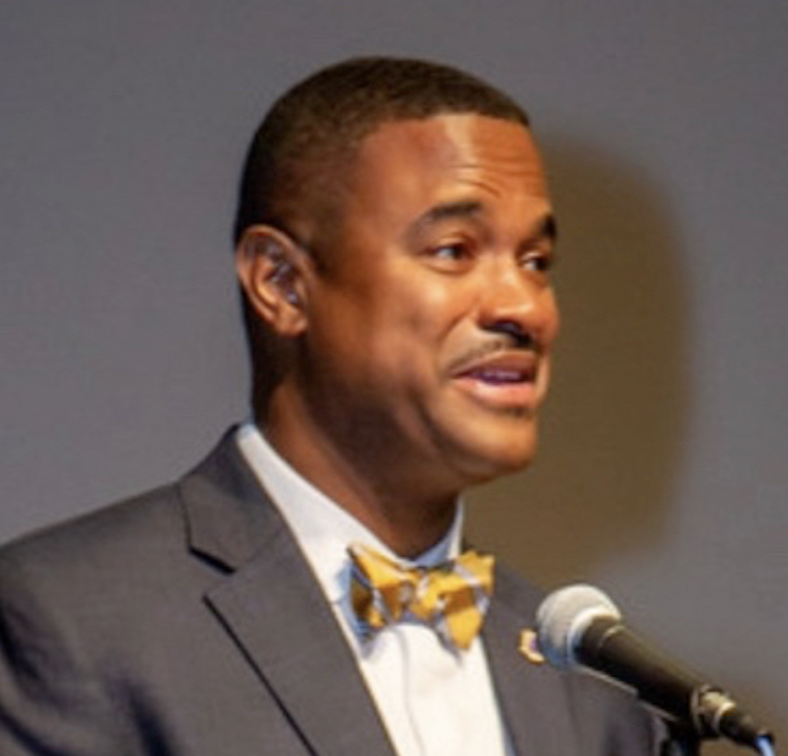
I was a four-year starter at Georgia Tech and the only freshman starter on the 1990 national championship team. In 1996, I started trying to understand why I was hurting the way I was and living the life I was living. Back then I was just a former player looking for answers. Those questions became my life’s work. Today I am a counselor and researcher who studies the men who leave the game, especially Black players who came up through big programs at predominantly white schools.
So when I see a multimillion-dollar campaign asking Congress to limit what college athletes can earn, I do not see people trying to save college sports. I see people trying to protect a business model.
Two of the highest-paid men in the history of this sport volunteered their names to cap what 19-year-olds can make. That should tell you who this is really for.
Watch how they sell it. In his ad, Nick Saban calls it tradition. “That tradition is worth defending,” he says, and he asks you to “help Congress protect this winning tradition.” So be honest about which tradition. The tradition is amateurism. And amateurism has always been the polite word for not paying the mostly Black young men who fill the stadiums.
For years, athletes were told to keep politics out of sports. When Colin Kaepernick took a knee against police brutality, when players spoke out against injustice, they were told to shut up and play. Some lost their careers. Kaepernick never played in the NFL again. Last month his memoir came out, and he told NBC News he does not even watch the NFL anymore. He watches college football. The industry that told athletes to keep politics out of sports is now running a political campaign of its own. It is a lobbying push and a bill in Congress, aimed at the game he turned to. Politics in sports was fine all along. Just not when it comes from us.
And notice where they did it. ESPN gave a sitting senator nearly ten minutes on College GameDay to lobby for this bill, on the same show where Nick Saban had been selling it. ESPN is not a bystander here. It holds the rights to the College Football Playoff and exclusive rights to the SEC, billions of dollars that depend on this system staying exactly as it is. Saban is on their payroll. In 2017, Cowboys owner Jerry Jones said any player who knelt during the anthem would not play. ESPN host Jemele Hill responded on Twitter by suggesting fans boycott the Cowboys’ advertisers. ESPN suspended her for two weeks and said she brought the company into “a conversation it didn’t belong in.” That same network cleared its biggest stage for a politician, because this time the politics protected their money. Ask yourself why they never made that room for us.
Watch how they talk about the money. Many of the loudest voices against paying athletes are the same people who call universal healthcare socialism and want to cut food assistance for hungry families. Yet the model they are defending is one of the biggest redistribution schemes going. It takes the money that football and men’s basketball players generate and spreads it around, most of it to coaching salaries, administrative payrolls, and buildings. The other sports get funded from what is left. That is socialism by their own definition. They just never call it that, because the wealth is flowing away from the athletes, not toward them.
So call it what it is. Selective socialism. Redistribution is fine when it takes from the players who earn the money. It only becomes a threat when those same players ask to keep their fair share. Paying a player his market value is the free market, the thing they say they believe in. Free market for everyone at the top. Central planning only for the labor.
Look closely at who they claim to be protecting. It was never the players who generate the money. They were never worried about us. Not our grades, our bodies, our careers, or what happened to us when the game was over. I study those men now, and I was one of them. In my own research on Black former Division I football players, I documented the grief that arrives when the game ends. The lost identity, the plans that do not materialize, the future that was supposed to follow. Fewer than two in a hundred are ever drafted by the NFL or NBA. And some of the few who get drafted never play a single down. This is a billion-dollar industry built on their backs and their futures. And now it calls paying them fairly the threat.
Then there is how they would enforce it. The bill hands the NCAA and the conferences an antitrust exemption to police the cap, and it lets schools negotiate their media rights together, like the NFL. Those are collective tools. They just refuse to give athletes the one collective tool that would make a cap fair, a union and a seat at the bargaining table with representation that has the athletes’ interest at heart. And that shield has no end date. The retention money for players expires in nine years. The NCAA’s protection from antitrust lawsuits does not. This is the same NCAA that lost 9 to 0 at the Supreme Court in 2021. Alston and the House settlement both came from antitrust lawsuits. Revenue sharing exists because athletes sued. This bill shields the NCAA’s rules from the next one.
The Senate bill says it stays neutral on whether athletes are employees. House Republicans want to ban it outright. Opponents also warn that writing the NCAA’s rules into federal law quietly closes the door on collective bargaining. Athletes could not negotiate those terms without Congress first repealing the law.
Notice who is asked to sacrifice. The bill caps what schools can pay athletes. Senators voted down an amendment to cap coach pay at $5 million a year. In 2025 alone, schools paid a record $228 million in buyouts to 15 fired football coaches. They will always find the money to pay a coach to leave. They just will not pay the players who stay.
Then look at who has to report. A player must report any deal over $600 within five days. The deal has to match what players with a similar profile earn. Coaches report nothing about their outside deals. The scrutiny only runs one direction.
The good that seems to be in this bill is very limited when you take a closer look. Scholarships are guaranteed for ten years after eligibility ends, so a former player can come back and finish his degree. A coach can no longer pull a scholarship because of an injury or a bad season. It says a lot that this even had to be written into law. Think about how many of us it happened to before anyone called it wrong.
Schools also have to cover medical costs for sports injuries for five years after a player’s last game. My knees, shoulders, neck, and back still hurt, more than 30 years after my last game. For a lot of us, the arthritis showed up later than five years. By then, the coverage would be gone.
The damage goes deeper than the joints. This summer, a Boston University study of nearly 20,000 former NFL players found they were about four times more likely than the general public to die of a neurodegenerative disease. Alcohol use disorder roughly triples a person’s risk of dementia. Heavy lead exposure raises it two to three times. Former NFL players die of dementia at nearly four times the national rate. The damage builds with every season. One study found the odds of CTE rise about 30 percent with each year played. In another study of donated brains, 48 of 53 men whose football careers ended in college had CTE. Many of us started tackle football at five or six years old. A player who started that young and redshirted in college can carry 18 seasons of hits by the time he walks away. And the symptoms can take years or decades to show up.
The bill does name CTE. It points players to a national fund for long-term conditions. That fund starts at $60 million a year for all of Division I, about $294 per athlete. The fund covers players diagnosed with CTE. But CTE can only be confirmed after death. This spring, one jury ordered the NCAA to pay $140 million to a single family over CTE. The fund is about a quarter of what schools paid fired coaches last year.
The bill never mentions mental health. It covers injuries “incurred through participation.” The grief I study begins when participation ends. Lance (a pseudonym), one of the men in my research, dealt with depression for about seven years. Gerald (also a pseudonym) did not realize he had been grieving until 19 years after his last game. A five-year clock does not match what I documented.
The new $22.5 million retention fund comes with a catch. Schools can use it only if they meet benchmarks for graduation rates and academic progress. Congress did not write those benchmarks. The NCAA and the conferences do. Expect them to use the Graduation Success Rate, a number that leaves out players who transfer or leave in good standing. It makes graduation look better than the federal rate does. The same people who control the money get to write the test for unlocking it.
The same goes for the five-year eligibility clock. The bill pauses it for pregnancy, a religious mission, or military service. A player who steps away to care for a sick parent has to hope the NCAA writes a rule for that.
Compare how players and coaches are allowed to move. A player gets one free transfer. The second time, he sits out a year, and the bill does not pause his five-year clock while he sits. There are a few exceptions. One is when his head coach leaves. So the player can move freely when the coach decides to go first. Coaches cannot leave midseason for another college. Nothing in the bill stops one from leaving for the NFL. The player needs a reason written into federal law. The coach just needs a better offer.
Now look at who they hide behind. Deion Sanders’ ad says the bill “strengthens Historically Black Colleges and Universities” and “keeps both men’s and women’s sports strong.” Hear the move. Name a sympathetic group so a wage cap sounds like generosity. It is the same trick as protecting the Olympic sports.
Start with the HBCU line, because I read that part of the bill. It funds broadband and cameras so HBCUs can broadcast their games. Not scholarships. Not facilities. Not a dollar toward the athletes themselves. It helps an HBCU film the game. It does nothing to help it compete for the best players. And even that money is only authorized, not guaranteed.
Then take the women. Women’s sports are among the fastest-growing businesses in sports right now. Women’s college basketball has drawn record audiences in recent years. The women who play have no seat at the table either. Look at what happened when the women of the WNBA stopped waiting for permission. This year they won the first real revenue-sharing deal in the history of women’s professional sports. They won it by organizing. That is the tool. This bill gives it to the NCAA and the conferences and keeps it from the players, men and women alike.
And when they warn this will hurt the Olympic sports, listen to what they are admitting. America is the rare country that funds its Olympic team with no public money, on the backs of college athletes instead. If representing the country matters, and it does, then shouldn’t the country pay for it? Why should the players the NCAA has always refused to pay foot the bill?
Let me be clear about something. I am not saying do not fund the other sports. Some of my closest friends ran track on scholarship. Their presence helped shape my whole college experience, and they earned every bit of their support. I want them funded. I want more of them funded. But that funding should come from where the money already sits, the coaching salaries and the top-heavy athletic administrations. Right now the schools decide where that money goes, and the athletes who generated it get no say. Give them a say. Give them a real share and a seat at the table, and I would bet a lot of us would choose to protect what our teammates in the other sports receive. The track team always deserved support. It should come from the surplus at the top, not from capping the players who built the enterprise.
Now the part the proponents of this bill will not talk about honestly, if at all.
Ask who fills the stadiums in football and men’s basketball. Then ask who profits from keeping their labor amateur. The men who generate the revenue are mostly Black. The coaches, athletic directors, conference commissioners, and boosters who decide where it goes are overwhelmingly white. That gap has never been an accident. It is the arrangement. The NAACP opposed this bill in August. Its letter notes that Black men make up about two-thirds of the football rosters at these schools. Teenagers in mostly white sports like tennis and golf have turned pro for decades. Nobody called it the end of sports. The panic only arrived when young Black men in football and basketball started getting paid.
The Senate passed the bill on September 28, 77 to 22. It now goes to the House, which is not expected to act until after the November midterms. If the House does not pass it by January 3, the bill dies and the fight starts over. Two weeks before the vote, when Senator Cruz went on College GameDay to promote the bill, the crowd booed him through his entire segment. The public saw it. The Senate passed it anyway.
So here is my ask. Call your representative before the House votes. Tell them a salary cap without a seat at the table is not protection. It is control.
Stop using their language. It is not amateurism. It is not charity. It is labor. Once you see it that way, you cannot unsee it.
Because there is nothing more American than getting paid what your work is worth.
Unless…